
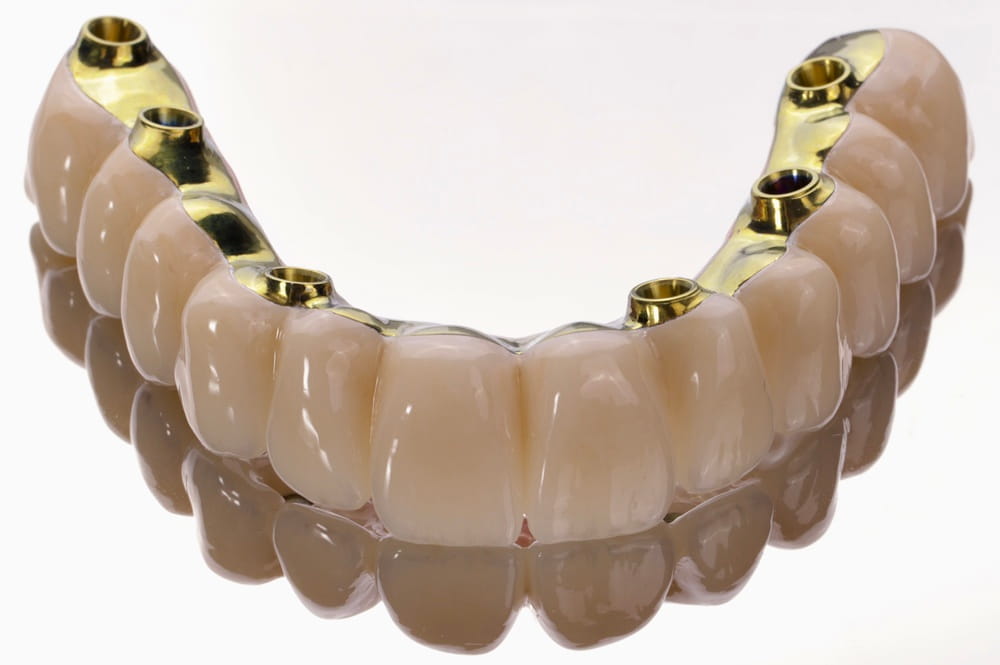
Patients exploring full-arch tooth replacement at Wyngate Dental of Bethesda in Bethesda, MD often come across two common options: All-on-4 and All-on-6 dental implants. Both solutions are designed to restore a full set of teeth using strategically placed implants to support a fixed prosthesis. While they share similarities, the number of implants used and the structural differences between them can influence long-term stability, bone support, and overall outcomes. Understanding these distinctions can help patients make informed decisions about their oral health.
Understanding Full-Arch Implant Solutions
What Are All-on-4 and All-on-6?
All-on-4 and All-on-6 are advanced implant techniques used to replace an entire arch of missing teeth. Instead of placing an individual implant for every missing tooth, a small number of implants are strategically positioned in the jaw to anchor a complete prosthetic bridge.
With All-on-4, four implants are placed in specific angles and positions to maximize available bone. The two posterior implants are often angled to provide additional stability and avoid anatomical structures. In contrast, All-on-6 uses six implants distributed more evenly across the jaw, offering additional points of support for the prosthesis.
Both approaches provide a fixed, non-removable solution that looks and functions similarly to natural teeth. They are often recommended for patients who have experienced significant tooth loss or who currently wear traditional dentures.
Key Structural Differences
Implant Support and Stability
The primary difference between All-on-4 and All-on-6 lies in the number of implants supporting the restoration. All-on-6 offers two additional implants, which can increase stability and distribute biting forces more evenly across the jawbone. This added support may be beneficial for patients with stronger jawbone density or those seeking maximum long-term durability.
All-on-4, however, is designed to be efficient and minimally invasive. By angling the posterior implants, this technique can often avoid the need for bone grafting procedures. For patients with reduced bone volume, All-on-4 may provide a practical solution without additional surgical steps.
Bone Preservation Considerations
Dental implants help stimulate the jawbone, reducing the risk of bone loss that commonly follows tooth extraction. Because All-on-6 uses more implants, it may provide slightly greater bone stimulation across the arch. However, both systems significantly outperform traditional dentures in preserving jawbone health.
In some cases, procedures such as extractions or socket preservation may be necessary before implant placement to optimize the foundation. A comprehensive evaluation helps determine bone quality and overall candidacy for either option.
Treatment Timeline and Candidacy
Both All-on-4 and All-on-6 procedures typically involve surgical implant placement followed by a healing period during which the implants integrate with the bone. Many patients receive a temporary fixed restoration the same day or shortly after surgery, allowing them to leave with functional teeth.
Candidacy depends on several factors, including bone density, overall health, and oral hygiene habits. Patients with advanced gum disease may require periodontal maintenance or additional treatment before implant placement. The choice between four or six implants often comes down to anatomical considerations and long-term treatment goals.
Cost may also vary between the two options due to the number of implants used. While All-on-6 may involve a higher initial investment, some patients prefer the added structural support for peace of mind over time.
Long-Term Performance and Maintenance
Both All-on-4 and All-on-6 are designed to provide long-lasting results when properly maintained. Daily oral hygiene, routine dental visits, and professional cleanings are essential to protect the surrounding gum tissue and implant structures.
Unlike removable dentures, these full-arch systems are fixed in place, eliminating concerns about slipping or adhesives. They restore chewing efficiency, improve speech clarity, and enhance overall confidence. Patients who previously struggled with loose dentures often report significant improvements in comfort and function after transitioning to implant-supported restorations.
For individuals in Bethesda, MD considering full-arch replacement, understanding the structural and functional differences between these two techniques is key to making the right decision. At Wyngate Dental of Bethesda, patients can learn about All-on-4, All-on-6, and other implant solutions that support long-term oral health. Choosing the appropriate system depends on individual anatomy, health status, and goals, but both options offer a stable, durable path toward a complete and confident smile.
Sources
Malo, P., de Araújo Nobre, M., Lopes, A., Ferro, A., & Moss, S. M. (2011). The All-on-4 treatment concept for the rehabilitation of the completely edentulous mandible. Clinical Implant Dentistry and Related Research.
Balshi, T. J., Wolfinger, G. J., & Slauch, R. W. (2014). A retrospective analysis of 800 Brånemark System implants following the All-on-Four protocol. Journal of Prosthodontics.
American Academy of Implant Dentistry. (2023). Implant-Supported Dentures and Full-Arch Replacement Options. AAID.com.